

NEWS
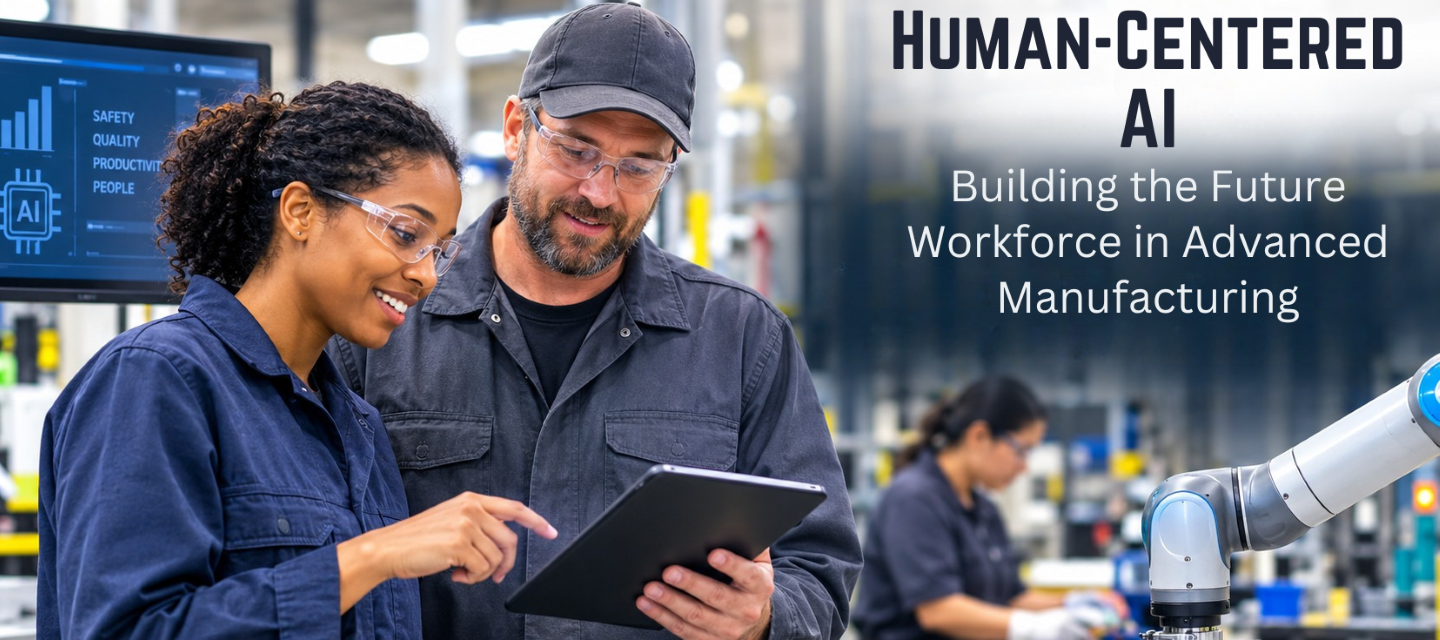
AI is moving onto the factory floor faster than many teams expected, and manufacturers need to know how they can use it to make people more capable, confident, and effective.
A recent Industry 4.0 Club fireside chat featuring guest speaker Anitha Kapu, Director of Manufacturing & Quality at Crusoe Energy Systems, explored a question many manufacturers are asking:
Will AI replace workers, or help create the most capable manufacturing workforce the industry has ever seen?
The answer starts with reframing AI itself. Rather than seeing it only as “artificial intelligence,” manufacturers can think of it as augmented intelligence: technology that expands human capability, improves decision-making, and frees people from repetitive, low-value tasks. In that model, people remain at the center of transformation, while AI becomes a tool for speed, accuracy, productivity, and better judgment.
That message matters because manufacturing is already being reshaped by AI-enabled ERP systems, quality management systems, robotics, predictive analytics, digital twins, and intelligent automation.
The real challenge is whether companies will implement these technologies in ways that strengthen people, processes, and systems together.
AI should augment people, not replace them. AI can displace some tasks, but its greatest value is helping workers make faster, better, and more informed decisions.
One of the strongest themes from the discussion was that AI reinforces long-standing manufacturing principles. Lean manufacturing, continuous improvement, waste reduction, quality, safety, and productivity all depend on empowering people to solve problems.
AI gives teams another way to remove repetitive work, process large amounts of data, and focus human attention where it matters most.
In the future, digital AI, physical AI, robotics, humanoids, and people will increasingly coexist on the factory floor. That future can be exciting, but it also requires thoughtful guardrails. Leaders must define where AI can support decisions, where humans must remain accountable, and how policies, procedures, and regulatory expectations should evolve alongside technology.
Workforce readiness is one of the biggest factors manufacturers may underestimate. Companies need to invest in software and automation as well as digital literacy, AI literacy, cross-functional education, and change management.
Senior operators with deep tribal knowledge, engineers working with complex data, and executives making capital decisions all need different kinds of support.
Ultimately, human-centered AI is combines people and technology. It is about building an operating model where both are stronger together.
Manufacturers that put people first—while investing in modern systems, clear guardrails, and a culture of learning—will be best positioned to lead the next era of Industry 4.0 transformation.
Want to hear the full conversation? Watch the webinar replay for more insights onhow manufacturers can build a human-centered approach to AI, automation, andthe future workforce.
NEWS
.png)
